These are reference ranges from existing materials. Maximum flow and highest purity may not coincide. Confirm the model, feed conditions, dew-point basis and optional configuration in the project datasheet.
ENGINEERING NOTES
Define the duty before selecting equipment.
The following establishes a technical discussion framework. Final performance, scope, certification and acceptance criteria are defined in the agreed technical specification.
01
Why integrate the package
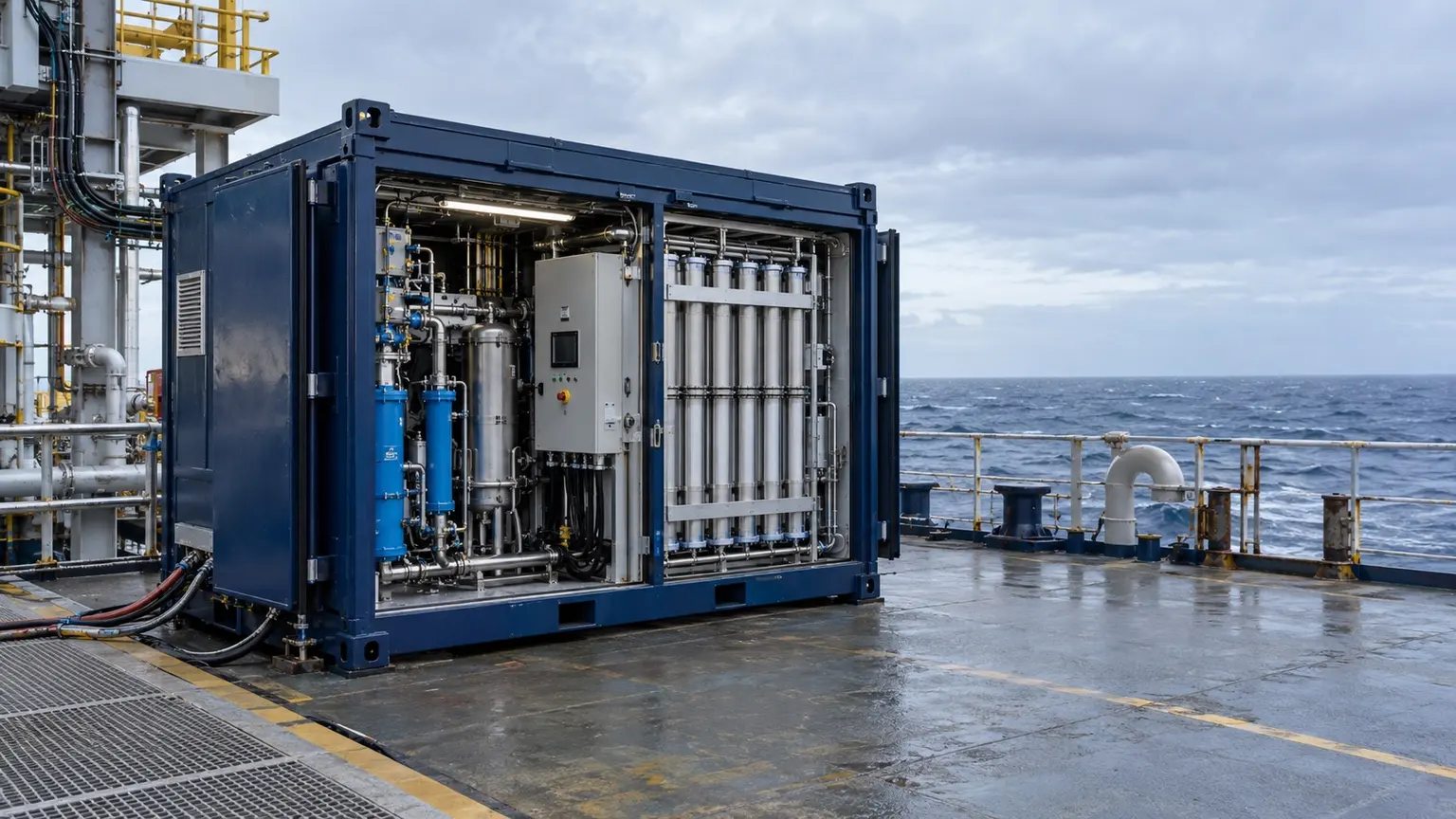
Factory integration reduces site interfaces where construction windows are short, conditions harsh or EPC boundaries complex. A container is not merely an enclosure: ventilation, heat rejection, fire safety, hazardous-area requirements, maintenance access and lifting must be engineered.
ENGINEERING SCHEMATIC
Container package boundary
Equipment, ventilation, heat rejection, controls, fire safety, access and site interfaces are checked as one package.
01Site utilitiesPower / air / drain
02Air-treatment bayFilter, dry, store
03Generation & polishingPSA / membrane / purifier
04Controls & safetyPLC, interlocks, analysis
05Site connectionsMinimised interfaces
02
Delivery milestones
Typical milestones include datasheet confirmation, layout review, long-lead release, fabrication inspection, FAT, preservation, transport, positioning, interface checks, SAT and operator training.
03
RFQ essentials
In addition to flow, purity and pressure, provide site, temperature range, altitude, salt or dust exposure, hazardous-area classification, power, dimensional limits, transport route and local codes.
04
Heat management and ventilation
Compressors, dryers and boosters can create significant heat inside an enclosure. Ventilation, air conditioning or forced cooling must be checked against maximum ambient temperature, altitude, equipment heat load and hazardous-area rules, with access for filter maintenance.
05
Interface freeze and factory integration
Freeze power, inlet and outlet flanges, drains, vents, communications, earthing, fire system and foundation interfaces before manufacture. Complete piping, wiring, instrument loops and interlock tests in the factory wherever practical.
06
SAT and start-up after transport
After arrival, inspect transport damage, fasteners, calibration, filters, lubrication and line cleanliness before individual, interlock, gas-on and performance tests. FAT does not replace site-interface verification.
Image information
This image explains equipment configuration and engineering processes; it is not a customer-site or acceptance record.
EQUIPMENT & DELIVERY
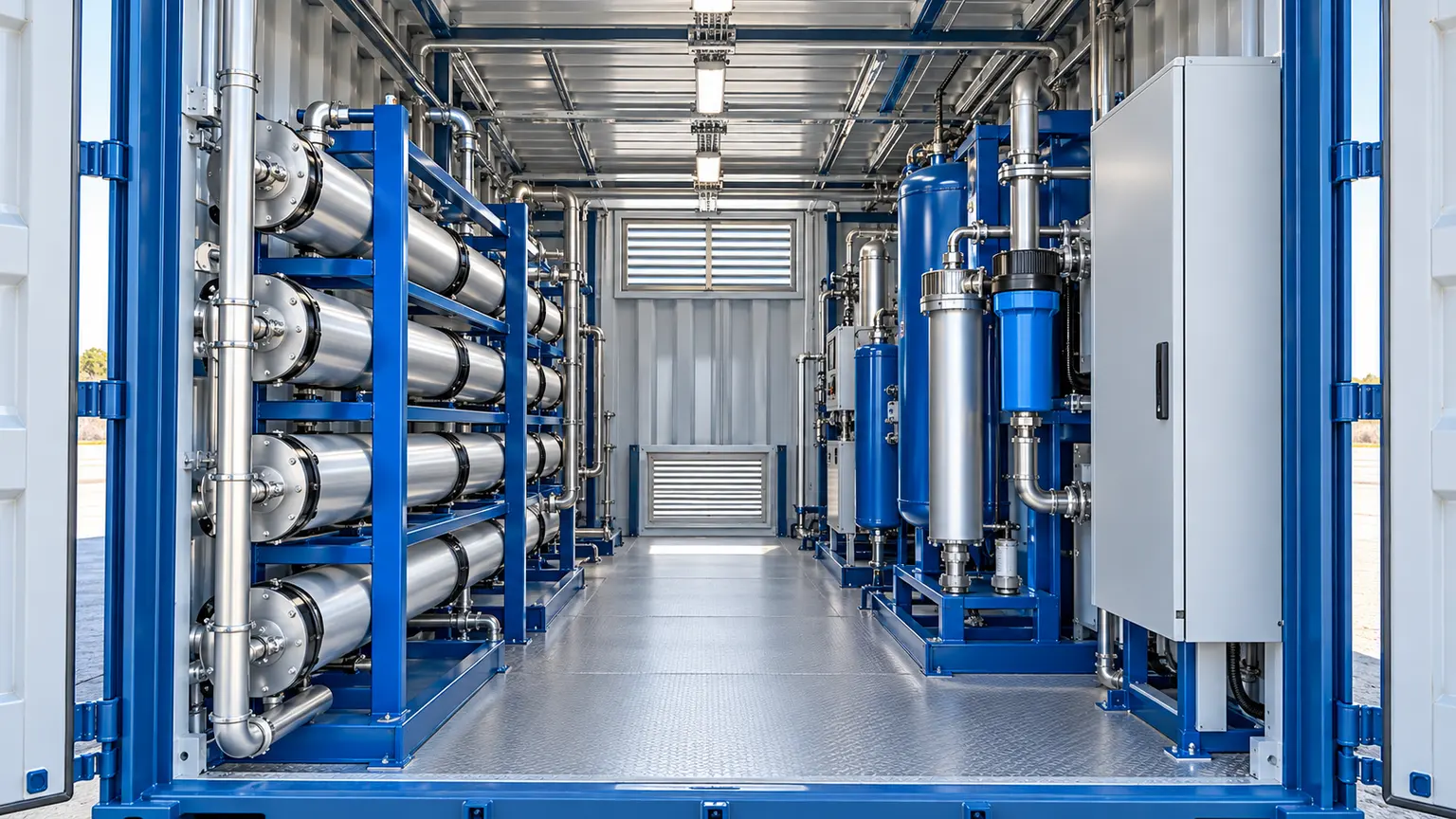
Leave room to maintain the package
A container combines equipment and interfaces in an engineered package. Check heat rejection, ventilation, drainage, noise, maintenance and electrical isolation. Transport dimensions and lifting arrangements require a separate review; this concept has no assumed dimensions.
Image information
This image explains equipment configuration and engineering processes; it is not a customer-site or acceptance record.
EQUIPMENT & DELIVERY
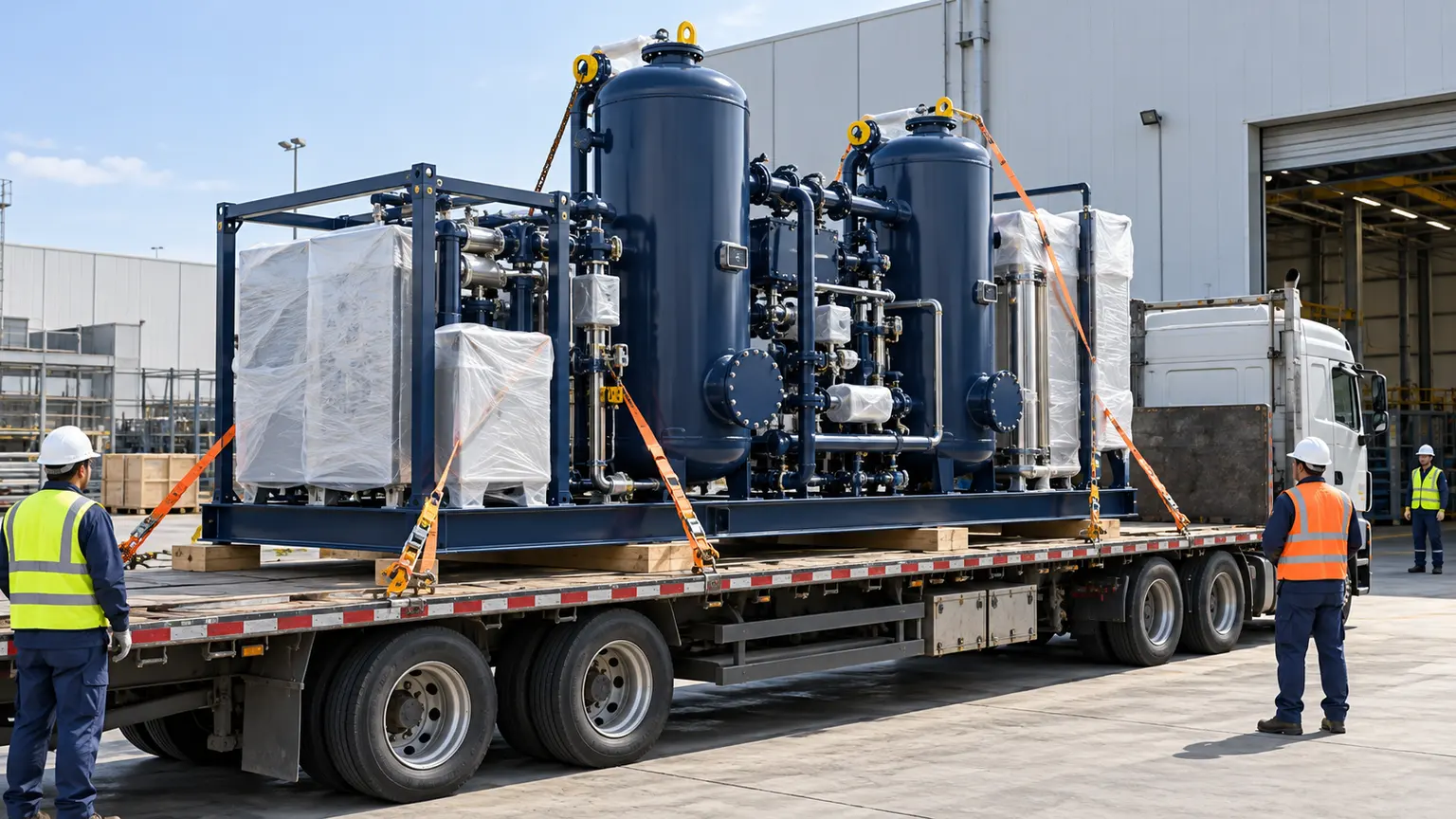
Delivery starts before the package leaves the factory
Confirm the equipment list, preservation, lifting points, centre of gravity and transport limits before dispatch. The site prepares foundations, power, earthing, gas and drainage interfaces. Written responsibilities reduce rework. This image illustrates preparation, not a case shipment.
Image information
This image explains equipment configuration and engineering processes; it is not a customer-site or acceptance record.
EQUIPMENT & DELIVERY
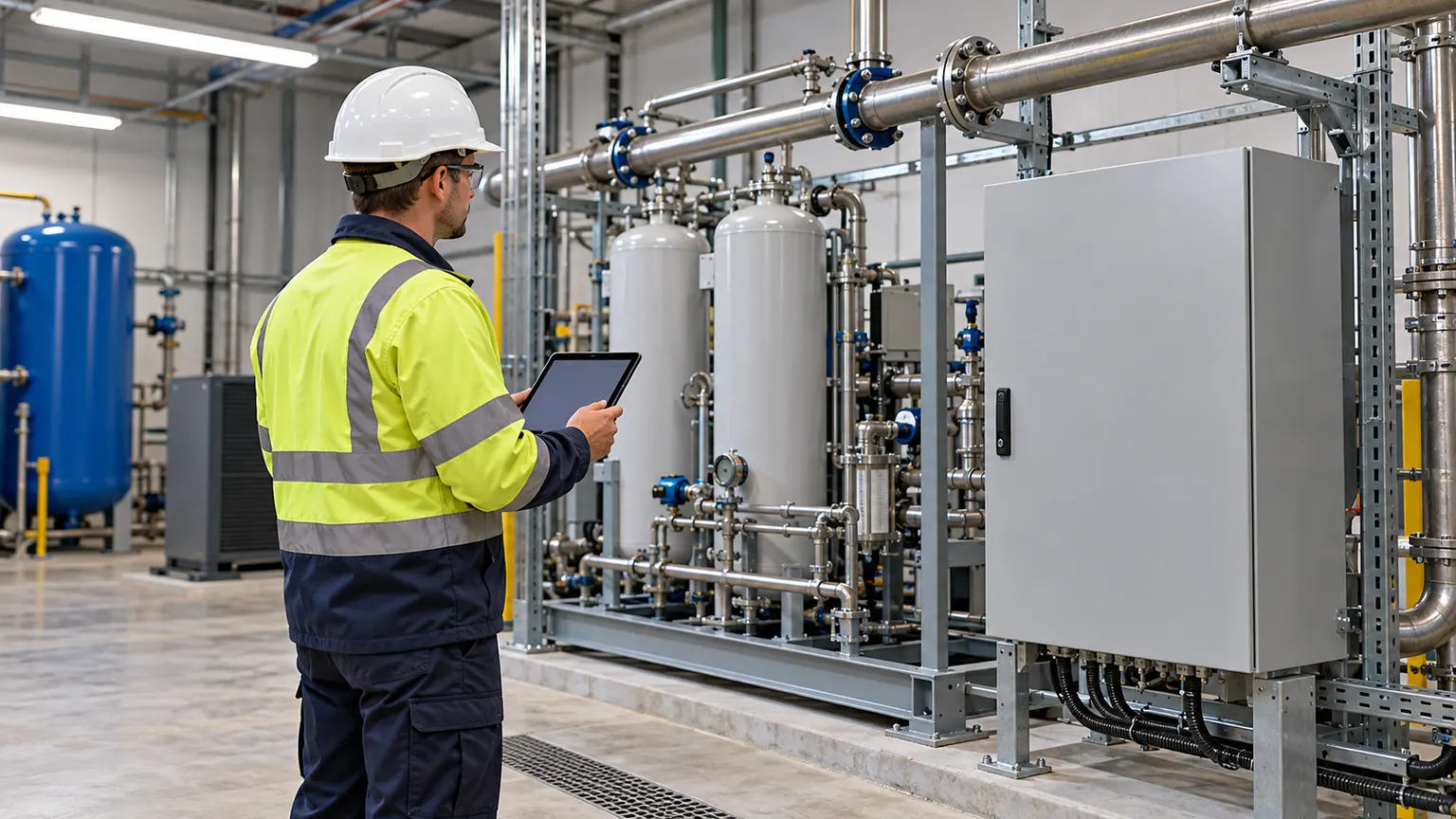
Commissioning continues to the point of use
After connection, check instruments, alarms, gas quality, pressure and off-spec handling under the agreed test plan, then complete training and handover. Acceptance depends on actual records; the screen shown here contains no performance data.
Image information
This image explains equipment configuration and engineering processes; it is not a customer-site or acceptance record.
EQUIPMENT & DELIVERY
Verify every interface before connection
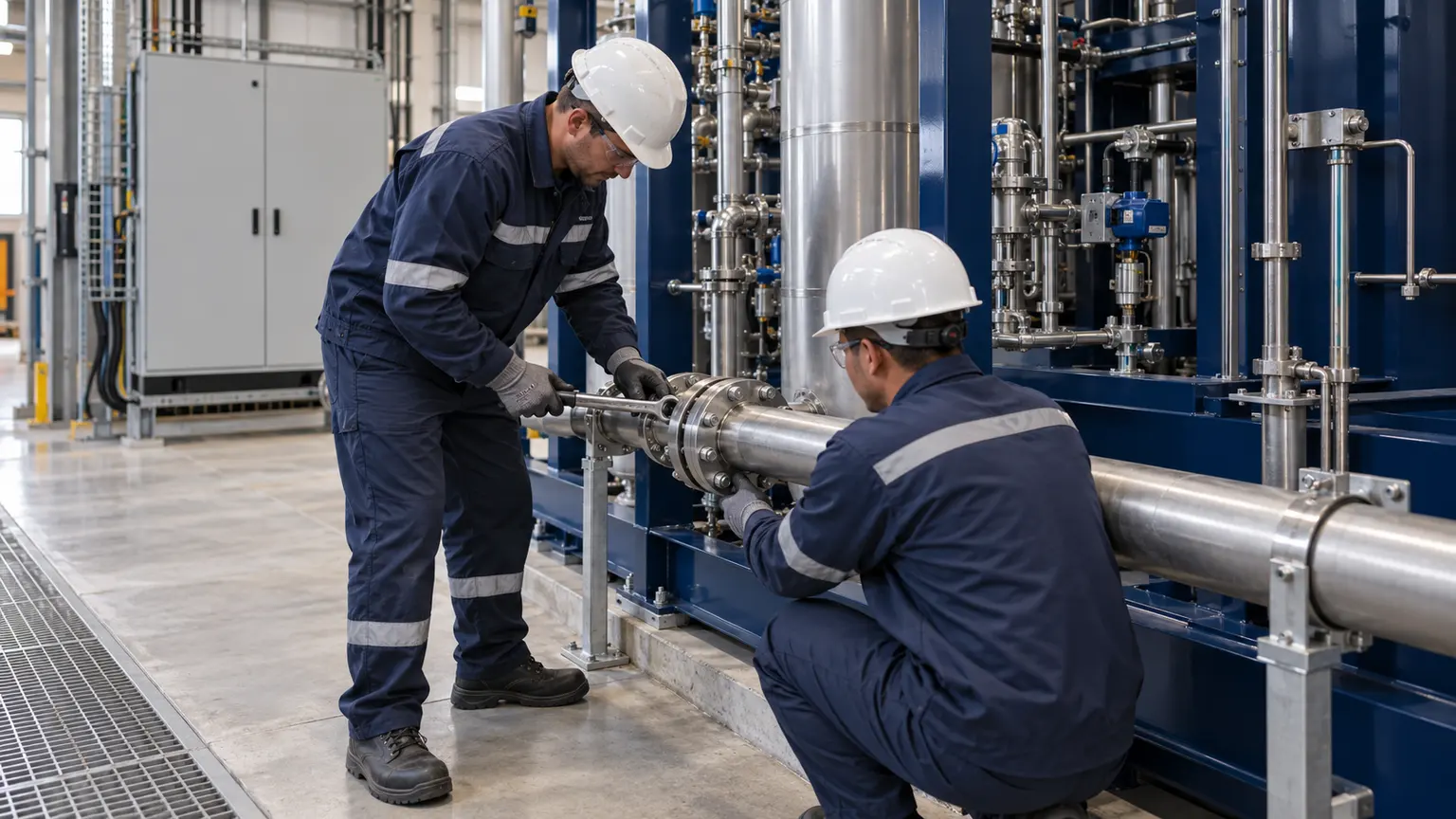
Agree who prepares foundations, power, earthing, gas connections, drainage and maintenance access before installation. Hook-up is followed by leak checks and agreed functional tests. This is a generic installation illustration, not a customer-site record.