Compare at the same duty
Use the same product flow, purity, pressure, temperature, hours and package boundary. Otherwise energy, price and size are not comparable.
NITRAISE KNOWLEDGE CENTER
Compare purity, flow, start-up, footprint, environment, maintenance and lifecycle cost.
Use the same product flow, purity, pressure, temperature, hours and package boundary. Otherwise energy, price and size are not comparable.
ENGINEERING SCHEMATIC
This establishes a preliminary decision path; final selection requires complete duty data, an agreed specification and verifiable evidence.
Higher purity, stable continuous load and broad industrial use often favour PSA, with valve cycling, footprint, air quality and maintenance reviewed.
Fast start, compact layout, weight or space limits, mobility and moderate purity can favour membrane technology.
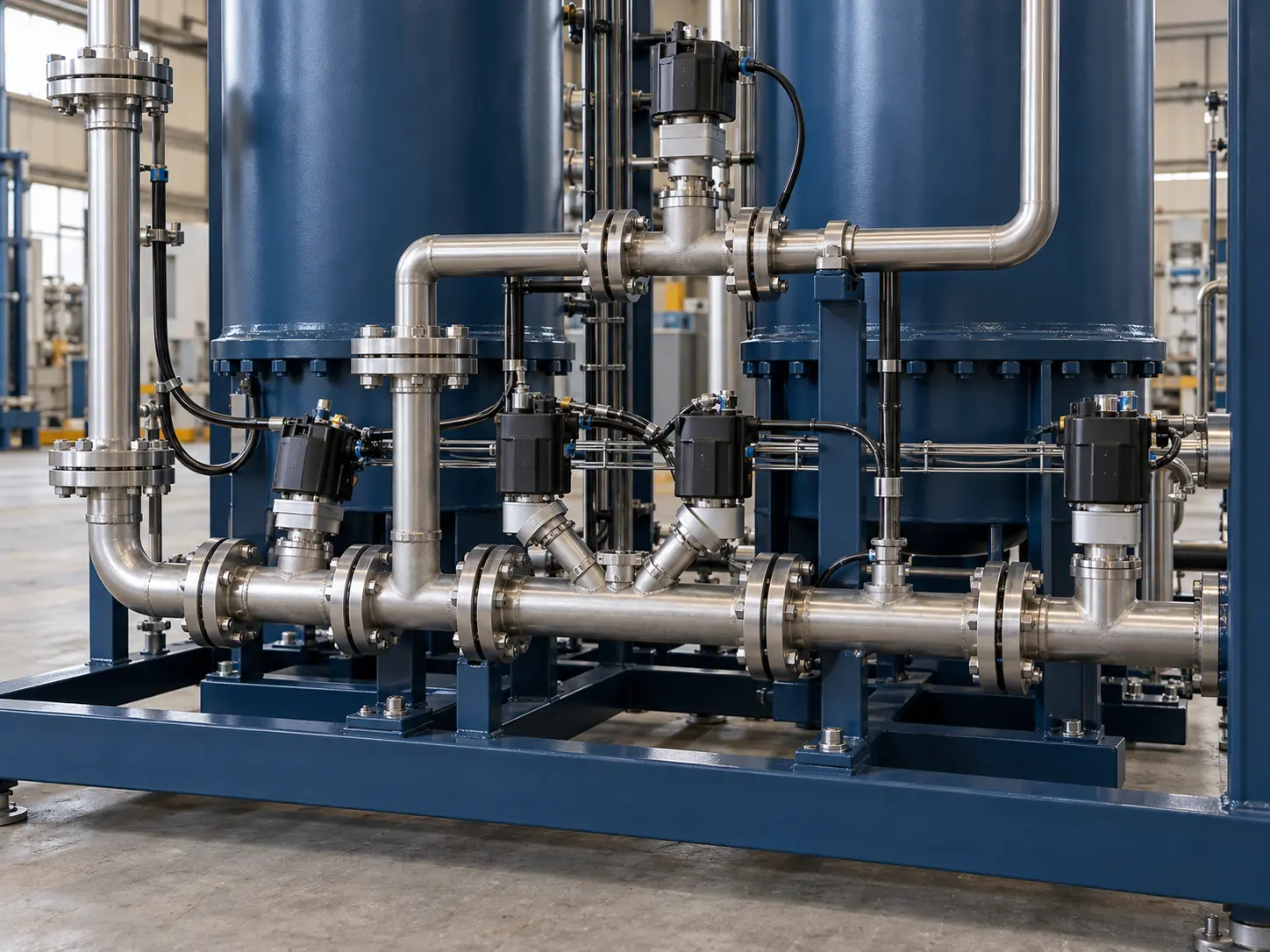
This image explains equipment configuration and engineering processes; it is not a customer-site or acceptance record.
EQUIPMENT & DELIVERY
One tower adsorbs while the other regenerates. Valves sequence feed, pressure equalisation, delivery and exhaust. Buffering and off-spec handling must be assessed separately from the process demand, with access and spares planned for the valves.
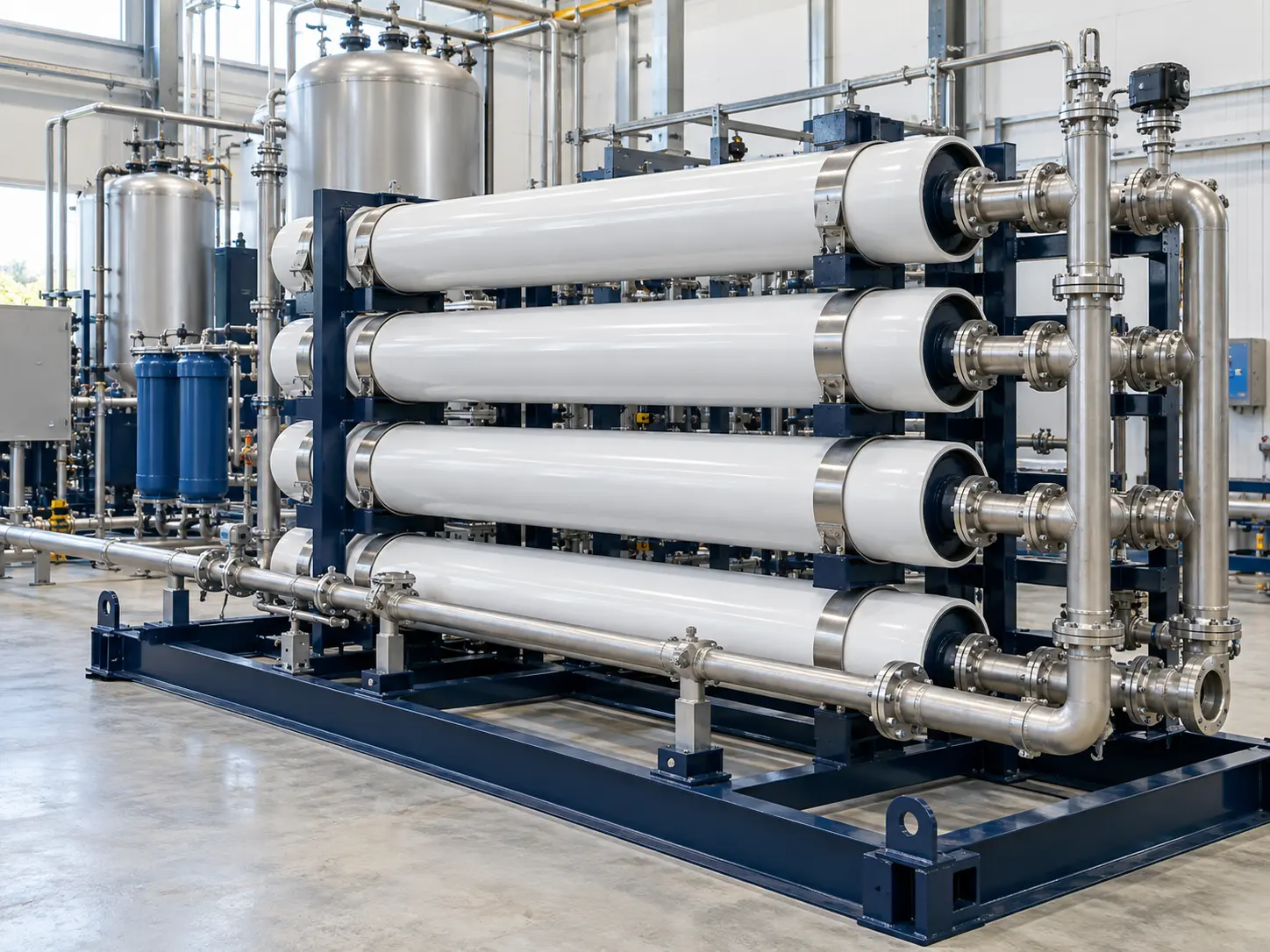
This image explains equipment configuration and engineering processes; it is not a customer-site or acceptance record.
EQUIPMENT & DELIVERY
Air enters the membrane bank. Faster-permeating gases leave on the permeate side, while nitrogen-rich gas exits the product side. Flow, purity, pressure and temperature interact; filtration and feed conditions must follow the membrane supplier’s data.
Often favoured for higher purity
Often suited to low-to-medium purity
Cyclic process reaches stable output
Fast start and response
Twin vessels and switching valves
Compact modules with few moving parts
Electronics, chemicals and high-purity duties
Oil and gas, offshore and mobile duties
Compare duty and lifecycle cost
Compare duty and lifecycle cost
FREQUENTLY ASKED QUESTIONS
A nitrogen generator separates nitrogen from compressed air using PSA or membrane technology. The correct method depends on purity, flow, pressure, environment and operating profile.
Average and peak flow, minimum acceptable purity, outlet pressure, dew point, operating hours, ambient temperature, altitude, power supply, redundancy and applicable standards.
Flow, purity, pressure, compressor and air treatment scope, redundancy, enclosure, hazardous-area design, certification, logistics, commissioning and acceptance requirements.
It can be for stable consumption, but the answer depends on actual annual volume, delivered-gas price, electricity, maintenance, financing and backup supply. Use a lifecycle model, not a headline percentage.
For the same technology and feed conditions, higher purity usually requires more feed air or reduces product flow. Specify the lowest purity that safely meets the process requirement.
Industrial systems can be engineered for continuous duty, but reliability depends on air quality, redundancy, maintenance access, ambient conditions and control strategy.
Yes. Ventilation, heat rejection, access, lifting, fire safety, hazardous-area requirements and local climate must be engineered into the container.
The technical agreement should define reference conditions, calibrated instruments, sampling point, stabilisation time, flow, purity, pressure, dew point and test duration.
There is no duty-free answer; compare at the same flow, purity and package boundary.
It is possible for special projects when load, backup or duty segregation justifies the added complexity.
CONTACT KEVIN
Send Kevin your application, location and the data you have. We will work through the next steps together.