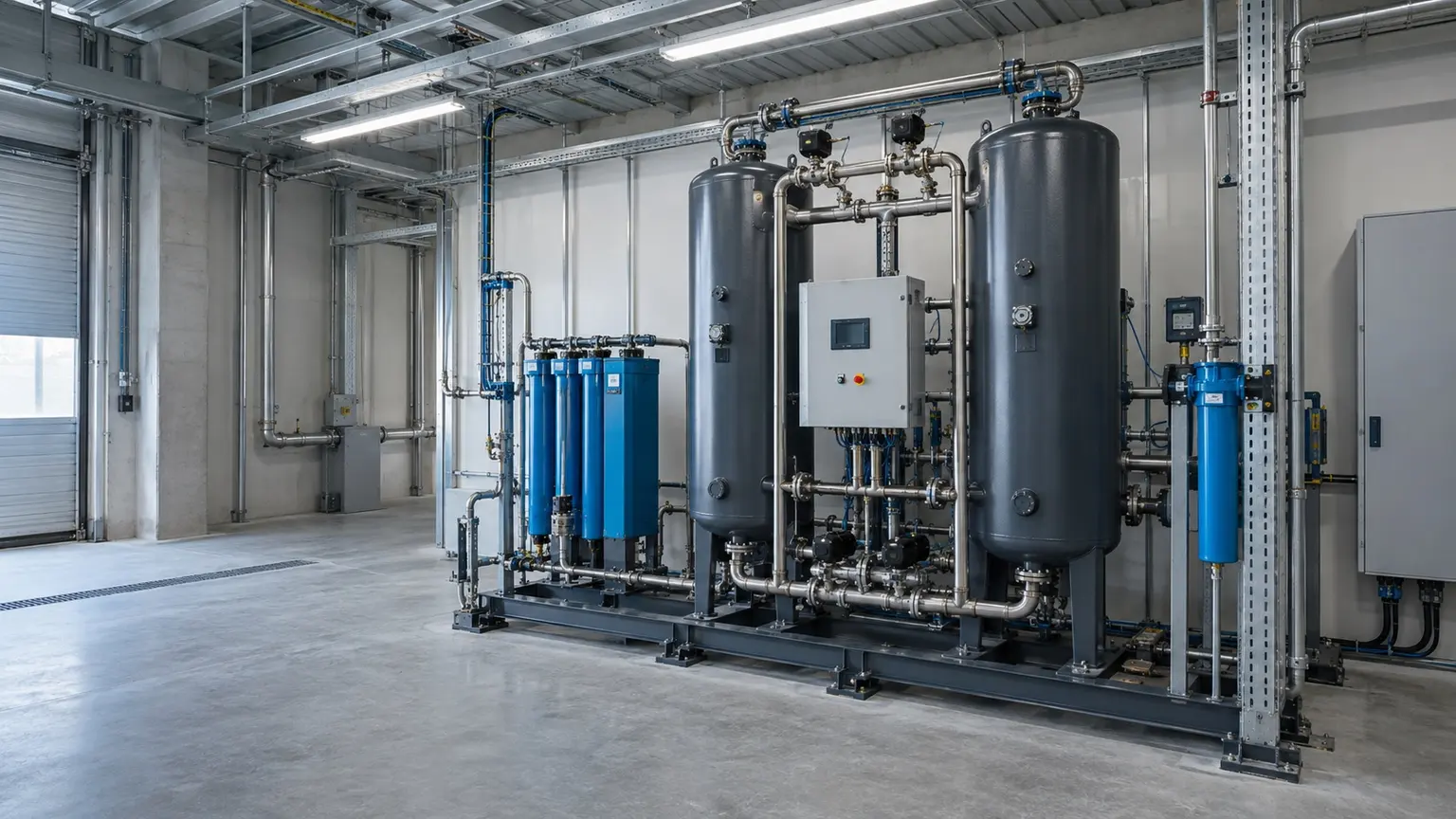
These are reference ranges from existing materials. Maximum flow and highest purity may not coincide. Confirm the model, feed conditions, dew-point basis and optional configuration in the project datasheet.
ENGINEERING NOTES
Define the duty before selecting equipment.
The following establishes a technical discussion framework. Final performance, scope, certification and acceptance criteria are defined in the agreed technical specification.
01
How it works and where it fits
Two adsorption vessels alternate between pressurised separation and regeneration. Carbon molecular sieve preferentially adsorbs oxygen, producing a near-continuous nitrogen stream. PSA is commonly selected for higher purity, continuous duty and scalable industrial flow.
Follow the cycle and the product gas path.
Concept gas path. Project engineering defines vent handling, valve timing, sampling and safeguards; this is not a construction drawing.
ENGINEERING SCHEMATIC
Six-stage PSA nitrogen path
Twin vessels alternate adsorption and regeneration; the buffer smooths cycling and the analyser verifies product gas.
01Ambient airFeed
02CompressorStable pressure
03Drying & filtrationRemove water, oil, particles
04Twin-tower adsorptionAdsorb / regenerate
05Buffer & analysisOff-spec gas vented
06Process useFlow, purity, pressure
02
System scope
A configured package can include air compression, receivers, drying and filtration, PSA generator, nitrogen buffer, oxygen analysis, off-spec venting, boosting, purification and remote monitoring. Final scope is documented in the technical agreement.
03
Data required for sizing
Confirm average and peak flow, minimum acceptable purity, outlet pressure, dew point, operating hours, ambient temperature, altitude, power, redundancy and applicable standards. Do not over-specify purity: higher purity generally reduces output and affects energy use.
04
Feed-air quality protects long-term reliability
Water, oil and particle removal upstream of the PSA is not optional detail. Inlet temperature, pressure dew point, oil content and differential pressure directly affect molecular-sieve life, valve cycling and product purity. The specification should state the required air quality and filter-change criteria.
05
Load variation and buffer strategy
Average flow does not represent start-up purging, batch peaks or simultaneous production lines. Peak duration, allowable pressure fluctuation and recovery time define buffer storage, train count and turndown so the generator is not forced into short cycling or temporary undersupply.
06
Performance acceptance and operating records
FAT and SAT should define reference temperature and pressure, meter and analyser accuracy, sampling point, stabilisation time, endurance period, dew point and off-spec handling. Trending differential pressure, cycle time, energy and purity supports preventive maintenance.
Image information
This image explains equipment configuration and engineering processes; it is not a customer-site or acceptance record.
EQUIPMENT & DELIVERY
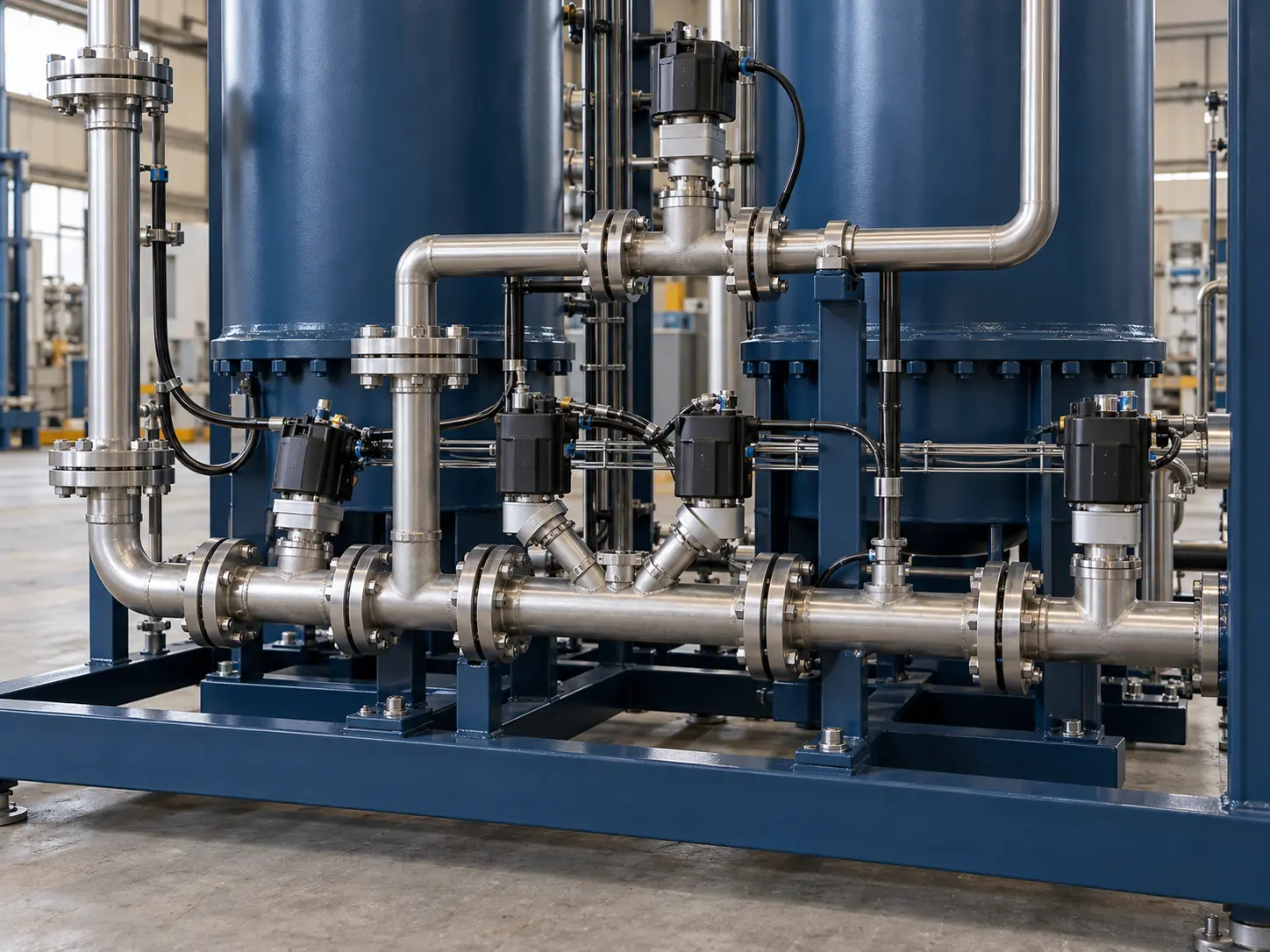
Valve sequencing between the towers
One tower adsorbs while the other regenerates. Valves sequence feed, pressure equalisation, delivery and exhaust. Buffering and off-spec handling must be assessed separately from the process demand, with access and spares planned for the valves.
Image information
This image explains equipment configuration and engineering processes; it is not a customer-site or acceptance record.
EQUIPMENT & DELIVERY
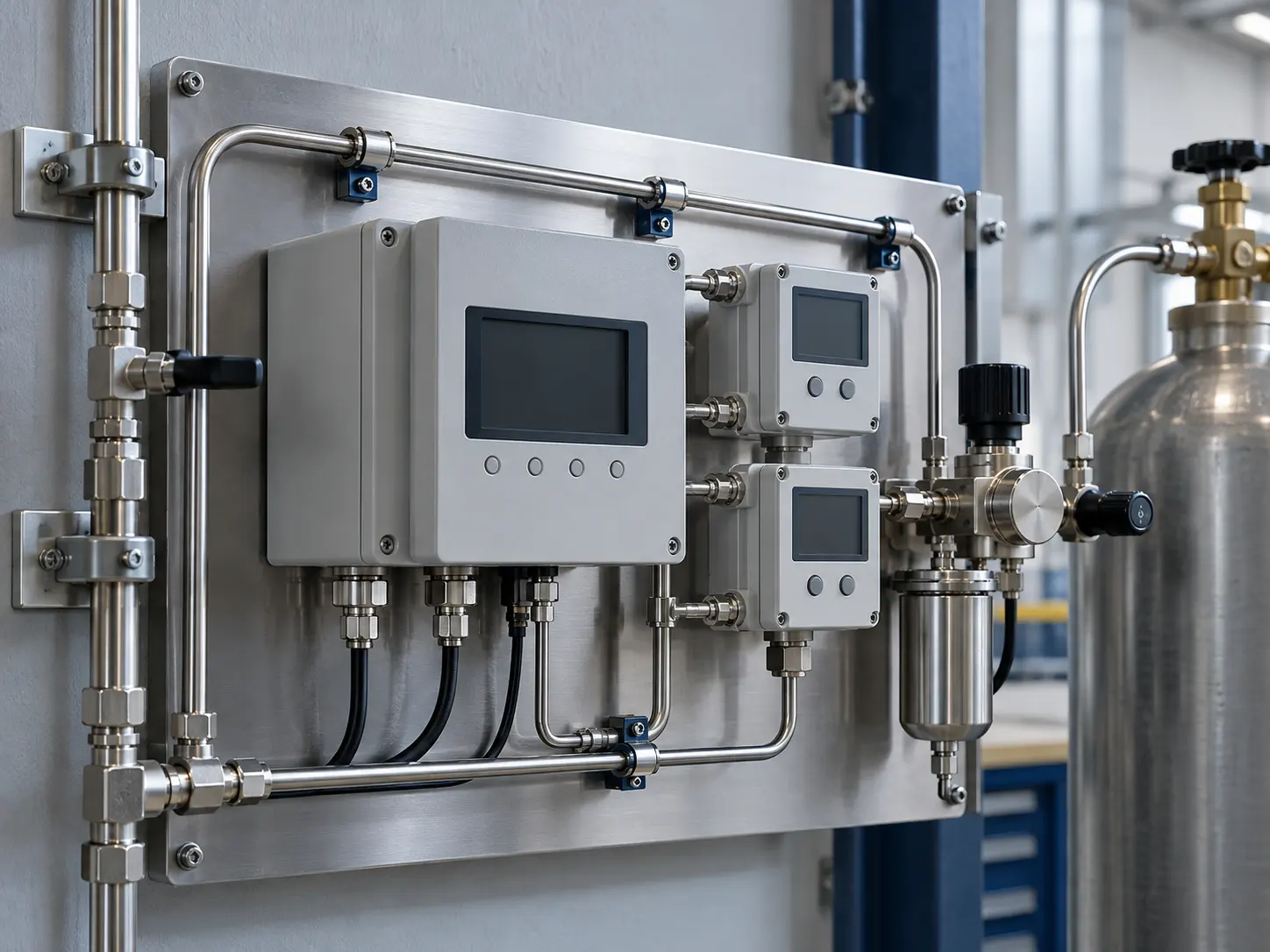
Measurement starts with the sampling point
Purity, residual oxygen and dew point are different specifications. Define the analyte, sampling location and pressure basis before choosing instruments, alarms and off-spec handling. The illustration explains the arrangement and contains no test readings.
Image information
This image explains equipment configuration and engineering processes; it is not a customer-site or acceptance record.
EQUIPMENT & DELIVERY
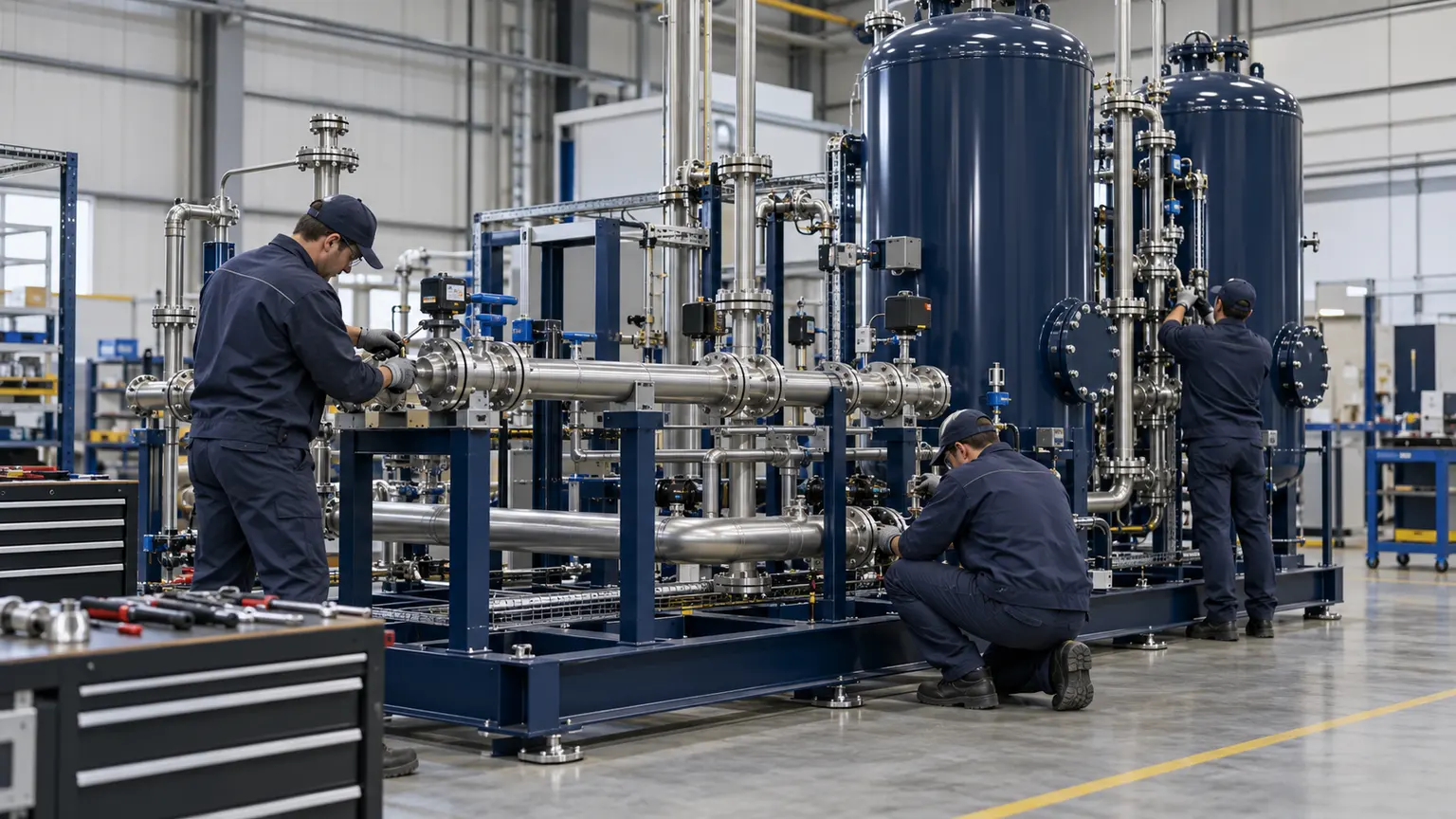
Build and inspect against agreed interfaces
Assembly follows controlled drawings and the equipment list. Review pipe supports, service access, electrical connections and instrumentation. Agree inspection items, test conditions and documents before manufacture. This manufacturing illustration is not evidence of a passed FAT.
A deliverable system makes every critical interface explicit.
01 Feed air→02 Air treatment→03 Gas separation→04 Analysis & storage→05 Process user
PAGE FAQ
Answer the critical questions before sizing.
Can a PSA generator run continuously?
Yes, when feed-air quality, buffering, valve-cycle life, maintenance access and the required redundancy or backup supply are engineered for continuous duty.
Is higher nitrogen purity always better?
No. Use the lowest purity that safely meets the process because higher purity generally requires more feed air or larger equipment.
What data is needed before a PSA quotation?
Provide average and peak flow, purity, pressure, dew point, operating hours, environment, power, altitude, backup strategy and project location.
CONTACT KEVIN
Tell us about your site.
Send Kevin your application, location and the data you have. We will work through the next steps together.