
Evaluate a nitrogen generator supplier against a defined operating duty, identifiable equipment, traceable performance evidence and a practical service plan. Ask who designs, manufactures, integrates and supports the package. Then compare the proposed test procedure, exclusions and handover documents. A factory photograph, certificate or attractive quotation is useful only when its scope can be connected to the equipment you are buying.
The previous step in procurement is collecting the process inputs. This step is checking whether a bidder can turn them into a working installation and provide evidence you can review. Price remains part of the decision, but it needs a technical and commercial boundary.
Start with a common duty, then evaluate the response
Give every bidder the same normal and peak flow, gas-quality limits, minimum pressure at the process, operating schedule and site conditions. Ask each to acknowledge the revision and list deviations. The nitrogen generator sizing guide explains the operating inputs that belong in that duty.
Look at how the supplier handles unknowns. A useful response identifies missing measurements, explains its provisional assumptions and tells you which choices could change. A confident model recommendation based only on annual gas purchases should prompt a request for the missing load profile.
| Review area | Evidence to request | Question to resolve |
|---|---|---|
| Duty confirmation | Signed technical offer and deviations list | Does the promised output match your conditions? |
| Equipment identity | Manufacturer, model and proposed bill of materials | Which items and entities are actually included? |
| Performance | Test procedure, data basis and relevant records | Were quality, flow and pressure demonstrated together? |
| Integration | Layout, utility schedule and connection boundaries | Who completes and checks the site work? |
| Service | Named support route, spares list and written terms | What happens when equipment stops? |
| Acceptance | Factory/site test plan and document register | What evidence closes each purchase milestone? |
Identify the contracting company and the actual equipment
A seller, manufacturer and local service company can be different entities. That arrangement can work, provided the responsibilities are explicit. Record who signs the supply contract, approves the design, builds the equipment, performs commissioning and handles warranty claims.
Request a proposed equipment list with identifiable compressor, dryer, filters, generator, analyser, receivers and any booster. Establish which makes or models may be substituted and what approval a substitution needs. A substitute with the same motor power does not automatically offer the same output or operating range.
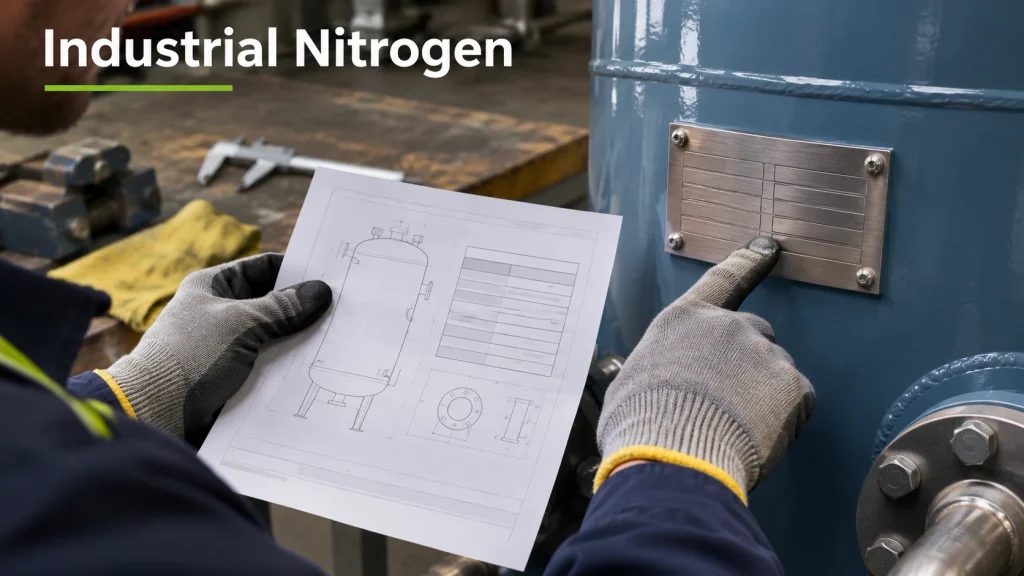
For certificates, check the issuer, named legal entity, product scope, validity and applicability to the proposed project. A management-system certificate describes a management system; it does not by itself verify nitrogen output or certify every pressure component. Project-specific regulatory requirements should be reviewed by the responsible engineer for the installation jurisdiction.
Match the named entity, model and document scope before treating a certificate as evidence for your purchase.
Ask how the proposed performance will be demonstrated
Request the conditions behind each rating: feed-air pressure and quality, inlet temperature, ambient limits, product purity, outlet pressure and volume reference basis. Ask for the permitted operating envelope rather than one favourable point from a brochure.
A useful test record relates the readings to a defined operating state and sampling point. It identifies instruments, calibration status, stabilisation and duration. A photograph showing low oxygen with an almost closed product valve cannot establish the required nitrogen flow at that quality.
A comparison with numbers: test the same condition
Consider a fictional enquiry for 100 Nm³/h at a specified oxygen limit and delivery pressure. Bid A states 100 Nm³/h but gives no oxygen limit. Bid B states the oxygen limit but gives no output at that condition. Neither response yet confirms the requested duty. Ask both suppliers to complete the same duty row before scoring capacity. These numbers illustrate a procurement gap; they are not measured equipment results.
Energy claims need the same discipline. Define which equipment is measured and count accepted product gas over the same interval as electrical consumption. If a compressor, dryer or booster is excluded, record that exclusion. A generator-only figure cannot describe the electricity bill for the complete supply installation.
What independent component data can establish
The CAGI Performance Verification Program provides third-party verification for participating rotary compressors and refrigerated dryers within its stated scope. Where applicable, check the specific component and published data sheet. That information supports comparison of the air equipment; it does not certify a complete nitrogen system or establish its nitrogen purity and energy intensity.
The Parker N2-120/160/240 operating manual is another concrete example of why conditions matter. It includes flow information at given pressure and purity, adjustment procedures and installation requirements. Ask your bidder for the equivalent documentation for the actual model proposed, rather than applying another manufacturer’s instructions to it.
Write the factory test around the purchase requirement
Agree the factory acceptance procedure before manufacturing is complete. It should state the instruments, agreed operating points, acceptance limits, control checks, witness arrangements and reporting format. Confirm which checks concern the generator alone and which include the compressor or booster.
Ask what happens at start-up, analyser failure and off-spec gas. Establish how the supplier will demonstrate the agreed control response without improvising unsafe faults. Test methods must follow the approved equipment procedure and qualified personnel’s plan.
Require flow, pressure and gas quality to be recorded at the agreed duty, with the test conditions attached.

Use reference projects to test relevance
Ask for a reference with a similar application, demand pattern, quality target, pressure and environment. A large project count is less useful when the examples all serve a different duty. Where customer confidentiality applies, request an anonymised scope and authorised technical discussion.
In the published Constant Group case from Atlas Copco, a sheet-metal manufacturer addressed nitrogen supply interruption with rental equipment followed by a permanent system. The permanent package included air equipment, nitrogen generation, buffers, boosting and storage. The reference is useful because it connects a supply problem with an equipment boundary. It remains the reporting supplier’s case, not a NITRAISE delivery or a promise of equivalent results.
When discussing a reference, separate four things: the original problem, supplied equipment, commissioning evidence and operating results. A purchase record supports a different statement from a signed site acceptance report. A factory photo does not establish the customer’s operating performance.
Check partner experience without confusing ownership
A brand may rely on a manufacturing or service partner. Ask which capabilities belong to which organisation and which are contractually available for your purchase. If a partner has supplied equipment to a named customer, establish whether it was a component, complete skid or wider installation. Avoid assuming that every project listed by a partner used the same supply chain or service agreement.
Evaluate the service route before equipment ships
Choose one likely maintenance event and walk through it with the supplier: an analyser fault, a valve problem or a blocked filter. Ask who receives the first call, what logs they need, who can authorise a replacement and where the required part will come from.
Clarify remote support hours, language, diagnostic access, on-site support availability and travel arrangements. Distinguish acknowledgement of a request from remote diagnosis, arrival on site and restoration of production. If a response time matters, put its definition and exclusions in the agreement.
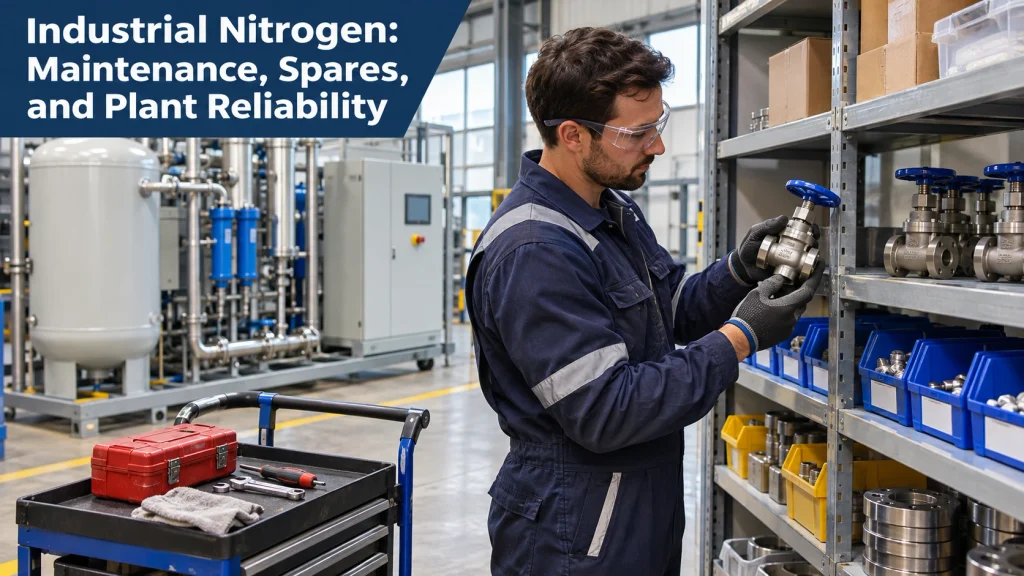
Request a model-specific spare-parts list with identifiers and lead times. Check whether the site can perform routine work, what training is included and which work needs the supplier’s approved technician. A warehouse photograph does not establish stock availability for the part your system needs.
Ask the supplier to explain one maintenance fault from first report through diagnosis, parts supply and return to service.
Compare proposals with gates before rankings
First resolve the items that prevent a valid comparison: unconfirmed duty, unclear equipment identity, missing installation scope or an unworkable acceptance plan. Keep those entries open rather than awarding points for an unsupported promise. Then compare service, lifecycle costs, delivery and commercial terms among technically reviewable offers.
| Supplier statement | What it leaves unanswered | Useful follow-up |
|---|---|---|
| “High purity” | Limit, output and pressure | Return one simultaneous duty statement |
| “Low energy” | Measurement boundary and accepted gas volume | Provide a defined method and included loads |
| “Turnkey package” | Site utilities and connection work | Mark every interface on the scope drawing |
| “Global service” | Availability for this location and model | Name the support entity and service terms |
| “Factory tested” | Which unit and which conditions | Provide the approved procedure and traceable report |
For an illustrative site scenario, suppose the factory test passes but the installed process receives insufficient pressure. Review the acceptance point, pipeline losses and simultaneous load before blaming the separator. A clear contract identifies who verifies the distribution system and which site test establishes the required result. This scenario explains a responsibility gap; it is not a reported customer failure.
Agree the documents that follow the equipment
Ask for the final equipment list, drawings, control description, operating manual, maintenance schedule and relevant inspection records. Define document language and delivery milestones. Require as-built revisions where the supplied arrangement changes.
Link payment and handover milestones to agreed evidence in the purchase terms. Clarify the treatment of outstanding items, site readiness delays, warranty commencement and commissioning expenses. The appropriate terms depend on the contract; do not rely on the words “standard warranty” without reading them.
Questions buyers ask
Is a factory visit necessary?
It can help assess visible equipment and processes, but it does not replace document review or a defined test. Set an agenda around the proposed model, traceability, inspection records and how discrepancies are closed.
Can a trading or integration company be a suitable supplier?
Yes, if its technical responsibilities, manufacturing arrangement, service access and contractual obligations are clear. Evaluate what the company can deliver and support for your project.
Does the lowest price identify the highest risk?
No. Compare the same equipment and operating boundary first. Differences may reflect exclusions, design choices, supply terms or margin. Ask the bidder to explain them with an itemised offer.
What if a bidder cannot disclose customer details?
Ask for an authorised anonymised reference, a model-specific documentation package and a witnessed demonstration against the agreed procedure. Record what remains unverified rather than inventing confidence from a logo list.
Bring a defined duty to the technical review
Prepare the operating conditions, scope boundary and evidence you want to see. Request a project discussion with NITRAISE to review the proposed configuration, documentation and acceptance approach. Ask the same questions of every bidder, including NITRAISE, so the decision rests on reviewable commitments.
About the author: Henry Xu
Henry Xu is the founder of NITRAISE and a senior industrial equipment engineer with 18 years in nitrogen equipment research, development and production.