Start with the question category
Technology, sizing, cost, installation, maintenance and delivery affect different decisions. Identify the category, then move to the matching guide or RFQ.
NITRAISE KNOWLEDGE CENTER
Engineering answers covering technology, sizing, cost, purity, pressure, installation, maintenance and delivery.
Technology, sizing, cost, installation, maintenance and delivery affect different decisions. Identify the category, then move to the matching guide or RFQ.
ENGINEERING SCHEMATIC
This establishes a preliminary decision path; final selection requires complete duty data, an agreed specification and verifiable evidence.
Website answers explain decision logic. Final performance, scope, standards, acceptance and responsibility belong in agreed project documents.
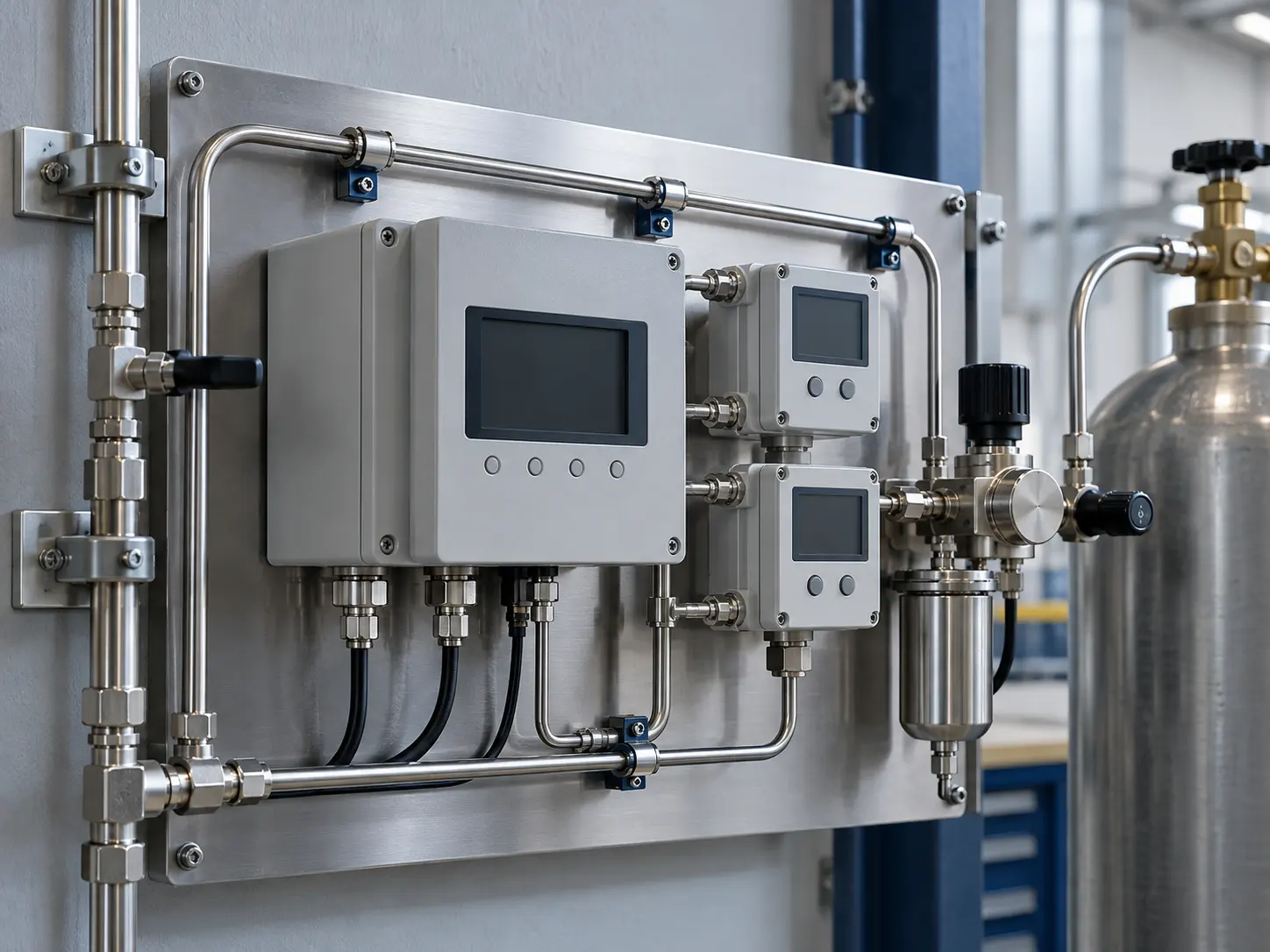
This image explains equipment configuration and engineering processes; it is not a customer-site or acceptance record.
EQUIPMENT & DELIVERY
Purity, residual oxygen and dew point are different specifications. Define the analyte, sampling location and pressure basis before choosing instruments, alarms and off-spec handling. The illustration explains the arrangement and contains no test readings.
Do not size solely from an existing nameplate or supplier invoice. Record average and peak demand, duration, purity, pressure, dew point, environment and planned expansion.
Continuous demand, batch peaks, start-up purging and backup duty need separate calculations to define trains, storage and backup connection.
Define reference basis, instrument accuracy, sampling point, stabilisation, test duration and off-spec handling before delivery.
FREQUENTLY ASKED QUESTIONS
A nitrogen generator separates nitrogen from compressed air using PSA or membrane technology. The correct method depends on purity, flow, pressure, environment and operating profile.
Average and peak flow, minimum acceptable purity, outlet pressure, dew point, operating hours, ambient temperature, altitude, power supply, redundancy and applicable standards.
Flow, purity, pressure, compressor and air treatment scope, redundancy, enclosure, hazardous-area design, certification, logistics, commissioning and acceptance requirements.
It can be for stable consumption, but the answer depends on actual annual volume, delivered-gas price, electricity, maintenance, financing and backup supply. Use a lifecycle model, not a headline percentage.
For the same technology and feed conditions, higher purity usually requires more feed air or reduces product flow. Specify the lowest purity that safely meets the process requirement.
Industrial systems can be engineered for continuous duty, but reliability depends on air quality, redundancy, maintenance access, ambient conditions and control strategy.
Yes. Ventilation, heat rejection, access, lifting, fire safety, hazardous-area requirements and local climate must be engineered into the container.
The technical agreement should define reference conditions, calibrated instruments, sampling point, stabilisation time, flow, purity, pressure, dew point and test duration.
CONTACT KEVIN
Send Kevin your application, location and the data you have. We will work through the next steps together.