Align the comparison boundary first
Delivered gas includes delivered price, rental, transport, losses, interruption risk and labour. On-site generation includes power, maintenance, consumables, backup, financing and residual value.
NITRAISE KNOWLEDGE CENTER
Price depends on flow, purity, pressure, package scope, redundancy, certification and site conditions; ROI must use actual consumption.
Delivered gas includes delivered price, rental, transport, losses, interruption risk and labour. On-site generation includes power, maintenance, consumables, backup, financing and residual value.
ENGINEERING SCHEMATIC
This establishes a preliminary decision path; final selection requires complete duty data, an agreed specification and verifiable evidence.
Model seasons, shifts, downtime, low load, peaks and tariff periods. One nameplate operating point can overstate savings.
Simple payback is useful for screening; final decisions should also compare NPV, overhaul, energy escalation, backup and utilisation.
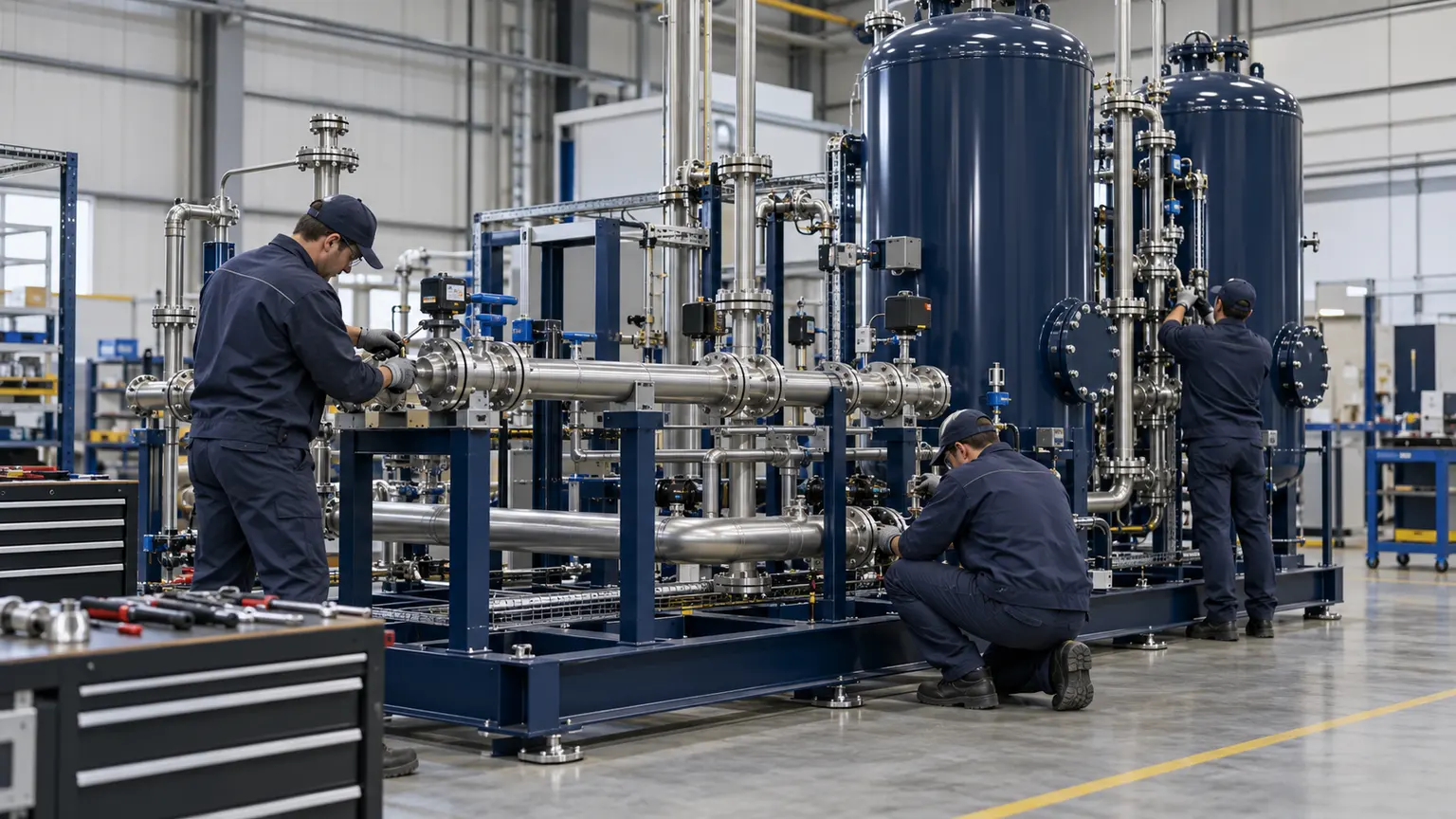
This image explains equipment configuration and engineering processes; it is not a customer-site or acceptance record.
EQUIPMENT & DELIVERY
Assembly follows controlled drawings and the equipment list. Review pipe supports, service access, electrical connections and instrumentation. Agree inspection items, test conditions and documents before manufacture. This manufacturing illustration is not evidence of a passed FAT.
COST MODEL
Annual delivered nitrogen cost = annual volume × delivered unit price
Annual on-site generation cost = electricity + maintenance + consumables + backup gas + financing
Simple payback = total investment ÷ annual net saving
FREQUENTLY ASKED QUESTIONS
A nitrogen generator separates nitrogen from compressed air using PSA or membrane technology. The correct method depends on purity, flow, pressure, environment and operating profile.
Average and peak flow, minimum acceptable purity, outlet pressure, dew point, operating hours, ambient temperature, altitude, power supply, redundancy and applicable standards.
Flow, purity, pressure, compressor and air treatment scope, redundancy, enclosure, hazardous-area design, certification, logistics, commissioning and acceptance requirements.
It can be for stable consumption, but the answer depends on actual annual volume, delivered-gas price, electricity, maintenance, financing and backup supply. Use a lifecycle model, not a headline percentage.
For the same technology and feed conditions, higher purity usually requires more feed air or reduces product flow. Specify the lowest purity that safely meets the process requirement.
Industrial systems can be engineered for continuous duty, but reliability depends on air quality, redundancy, maintenance access, ambient conditions and control strategy.
Yes. Ventilation, heat rejection, access, lifting, fire safety, hazardous-area requirements and local climate must be engineered into the container.
The technical agreement should define reference conditions, calibrated instruments, sampling point, stabilisation time, flow, purity, pressure, dew point and test duration.
No. Actual annual volume, delivered price, electricity, load profile and backup cost are required.
No. Include maintenance, consumables, analyser calibration, spares, backup gas and financing.
CONTACT KEVIN
Send Kevin your application, location and the data you have. We will work through the next steps together.