
A nitrogen generator RFQ should state the application, normal and peak demand, gas-quality limits, pressure at the use point, operating schedule and installation conditions. It should also define the equipment boundary, backup arrangement, required documents and acceptance test. Mark missing inputs as unknown and ask suppliers to identify their assumptions before you compare prices.
A request that says “send your best price for a nitrogen generator” leaves each supplier to choose a different duty. One may include an air compressor and booster; another may price only the separation module. The resulting totals say little about which proposal will run your process.
A one-page checklist to send with your enquiry
Use this table as the cover sheet. Attach the evidence behind the entries: machine specifications, consumption logs, a layout and photographs of existing utilities. Keep a revision number so every supplier answers the same enquiry.
| Input | What to provide | If it is unknown |
|---|---|---|
| Application | Process, product and reason nitrogen is used | Name the process owner who can confirm requirements |
| Flow | Normal, peak, peak duration and simultaneous users; reference conditions | Attach operating logs and machine demand data |
| Quality | Maximum oxygen, moisture and other relevant limits | Attach process or machine specification |
| Pressure | Required pressure at the use point and connection location | Show existing regulator and pipeline arrangement |
| Schedule | Shifts, days, start-up pattern and planned growth | Separate current operation from future plans |
| Site | Location, ambient range, altitude, indoor/outdoor and utility data | Arrange a site survey |
| Scope | Included equipment, site works, backup and connection owners | Request an itemized scope and exclusions |
| Handover | Documents, testing, delivery, commissioning and support | Request a proposed acceptance plan for review |
The Atlas Copco nitrogen enquiry form provides a useful real-world comparison: it asks about the application, supply arrangement, flow, pressure, operating hours and allowable oxygen. These are inputs that affect a quotation. A model name alone cannot replace them.
Describe what the process actually consumes
Separate normal demand from the peak
List each user and record whether users run together. A cylinder purchase history can help establish total consumption, but it does not show the short burst when several machines start at once. Record peak duration and the time available to recharge storage between peaks.
Illustrative example: a workshop uses 30 Nm³/h most of the shift and reaches 80 Nm³/h for five minutes. The extra gas above the normal demand is approximately 4.2 Nm³ during that interval: (80 − 30) × 5/60. That calculation describes a demand event. It does not size a storage vessel, because usable pressure range, recharge time and operating conditions still matter.
Define what Nm³ means in your enquiry, including reference temperature and absolute pressure. If existing data use scfm or actual m³/h, preserve their original basis rather than converting from an unexplained unit label. The nitrogen generator sizing guide helps assemble the underlying demand information.
Attach the demand profile with the peak duration and the number of machines operating together.
Put quality and pressure on the same duty sheet
Ask the process owner to confirm the quality limits
Specify maximum residual oxygen where that is the process requirement. Include moisture, particles or oil limits when the application needs them. State the measurement method and sampling location to be agreed. A nitrogen percentage does not, by itself, define every contaminant.
For a packaging line, distinguish the gas supplied to the machine from the residual oxygen measured inside the finished pack. Seal quality, product characteristics and flushing conditions can affect the pack result. The generator supplier needs the gas specification; the packaging process also needs its own validation. Avoid copying a purity value from another product without checking the line requirements.
Where dew point is specified, record whether it is pressure dew point and the measurement pressure. If you only have an existing analyser reading, send the instrument and sampling details with it. Ask the supplier to flag any difference between its standard specification and your requested condition.
State where pressure must be delivered
Identify the process connection and required minimum pressure while gas is flowing. Include pipeline length, restrictions and downstream regulators where known. A generator outlet pressure quoted without downstream losses may not describe what the machine receives.
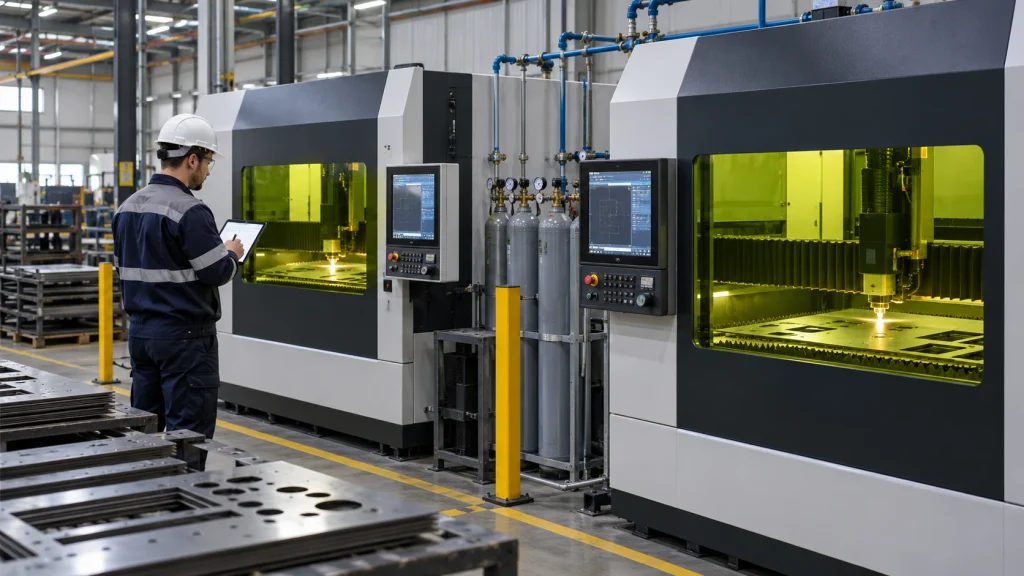
For laser cutting, send the machine manufacturer’s gas specification and expected material/production mix. Ask separately about nitrogen generation, boosting, storage and delivery to the machine. Do not assume that a low-pressure generator price includes a high-pressure supply package.
A published laser-cutting project: ask about the transition plan
In its May 2026 Giles Foodservice Equipment case, ELGi describes a phased installation developed with Mobile Mechanical Services. The team reviewed nitrogen demand, purity and future manufacturing plans. On-site generation then operated alongside the existing delivered supply, producing part of the nitrogen used for laser cutting.
The useful RFQ lesson is to explain the intended changeover. Will delivered gas remain as backup or cover part of demand? Who connects the two sources, and what happens during maintenance? The published account is a supplier case, not a NITRAISE project or a guarantee of the same outcome at another factory.
Write the required gas quality and pressure at the process connection, then identify who must approve those values.
Show the supplier the site it must fit
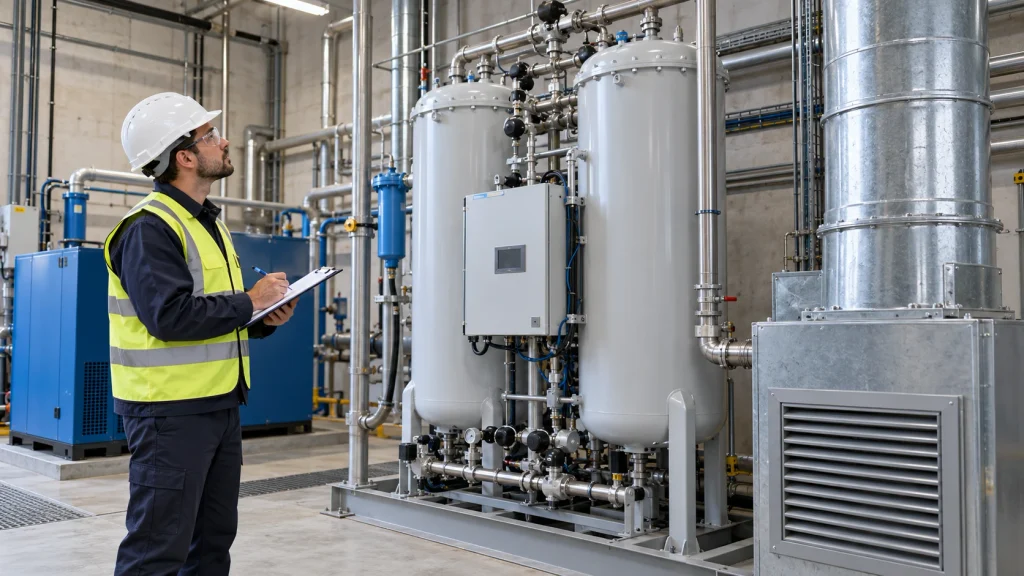
Send a marked layout and recent photographs of the proposed installation area, access route and utility connections. Include available footprint and service clearance, ceiling height, door openings and lifting restrictions. A footprint that fits on paper can still block filter replacement or leave no route to bring a receiver into the room.
Record minimum and maximum ambient temperatures, altitude and indoor or outdoor installation. Identify dust, rain, salt exposure and any classified hazardous area. Provide the site’s approved area classification rather than asking a supplier to infer it from a process name. Applicable codes and equipment approvals depend on the installation location and project specification.
Check existing utilities before promising them
If the plant will supply compressed air, give the pressure available during simultaneous plant demand, capacity, treatment arrangement and measured air quality where available. A compressor nameplate or motor rating is not proof that spare air is available at the connection.
Provide voltage, frequency, phases, allowable electrical load and control interface requirements. Identify cooling, ventilation, drains, vent routing and communications. State which utility details are confirmed and which still require a survey.
For example, a workshop may offer a shared air header because it holds pressure when production is quiet. When a large air user starts, the generator inlet pressure may fall. The RFQ should therefore request a proposal based on measured coincident demand or a separately priced dedicated source. This is an illustrative site scenario, not a reported customer incident.
Define the delivery boundary before comparing totals
Request a line-by-line scope for compressor, treatment, generator, receivers, instruments, booster, storage and backup. Identify foundations, offloading, interconnecting pipework, power cables and commissioning separately. The NITRAISE equipment range is a starting point for discussing the package; the agreed scope must name the actual items.
Ask for a deviations list, including every assumption that affects capacity, quality or price. If one quotation excludes the compressor, compare it with the same boundary in the other proposal. Add separately sourced equipment and site work before drawing a commercial conclusion.
Mark every supply, installation and commissioning responsibility before requesting the final quotation.
Agree what evidence will close the purchase
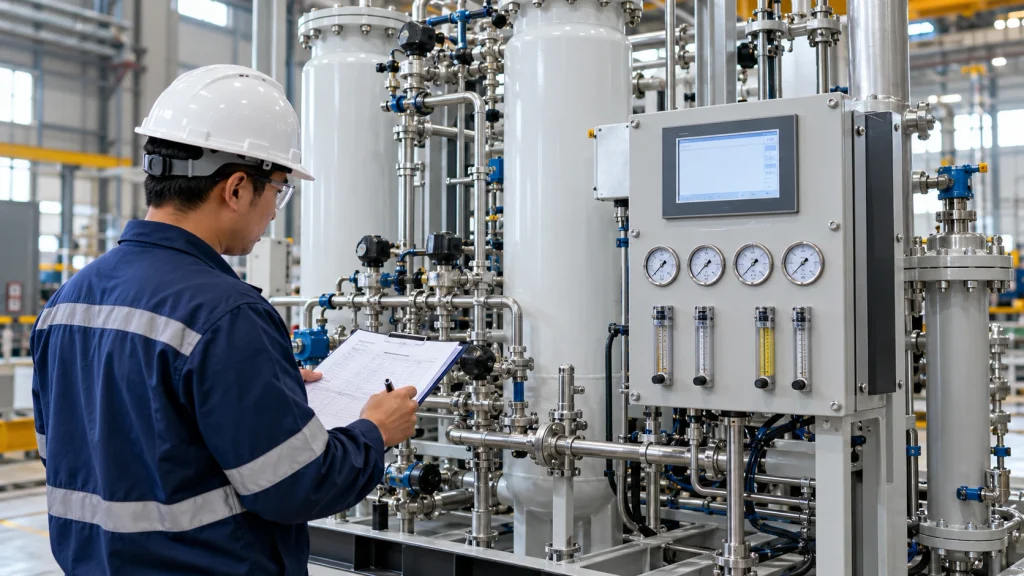
Request the proposed process drawing, general arrangement, equipment list, utility schedule and control description. Specify document language, drawing format and approval stages. Ask which certificates and inspection records apply to the quoted equipment and installation jurisdiction; “all certificates included” is too vague to review.
| Acceptance topic | Define in the RFQ | Evidence to request |
|---|---|---|
| Capacity and quality | Flow, pressure and gas quality under agreed inlet conditions | Test method, instruments and recorded results |
| Control response | Start-up, analyser fault and off-spec product handling | Agreed cause-and-effect checks |
| Factory inspection | What can be tested before shipment | Inspection plan and witness points |
| Site commissioning | Tests requiring actual site utilities and process connection | Site acceptance record and outstanding-items list |
| Handover | Training, manuals, spares and support contacts | Document register and signed handover list |
Factory testing cannot establish every site result. A short factory pipe run does not reproduce the installed distribution network. Agree which checks are repeated at site and which party supplies the utilities, instruments and process availability for those checks.
Make the commercial comparison usable
Ask for quotation validity, delivery basis and named destination, production lead time, document approval assumptions and shipment readiness criteria. Clarify offloading, installation labour and travel expenses. State the required commissioning window and identify who coordinates access and permits.
Request warranty start conditions, coverage, exclusions and the proposed service route. Obtain a priced commissioning spares list and routine consumables list. The purchase team can then see both the equipment price and the work required to put it into service.
Questions buyers ask before sending an RFQ
Can I request a budget quote without measured consumption?
Yes. Send machine data, schedules and current supply records, label the uncertainty and ask for a budget proposal with explicit assumptions. Confirm demand before committing to the final equipment duty.
Should I specify PSA or membrane?
You can ask for both where the duty permits. Give the same quality, pressure and demand requirements and request the selection rationale. Prescribing a technology before confirming the application can exclude a suitable option.
Should I add a large future allowance?
Describe current duty and future expansion separately, including timing and the additional users. Request staged options. An unexplained percentage allowance makes it difficult to assess the present load and future investment.
What should every supplier return?
A duty confirmation, itemized scope, utility requirements, layout, deviations list, acceptance proposal and commercial terms. Require suppliers to mark exclusions so missing equipment does not disappear inside a low total.
Check the specifications behind your RFQ
Use these guides to define the gas-quality limits, delivery pressure, moisture basis and package boundary before comparing supplier quotations.
- Define nitrogen purity and residual oxygen limits
- Specify pressure at the generator and point of use
- State the dew-point basis and measurement conditions
- List the equipment included in a complete nitrogen system
Prepare one enquiry package
Combine the completed checklist, demand evidence, gas specification, site layout and commercial requirements under one revision. Send identical information to each supplier and distribute clarifications to all bidders. Keep unknowns visible until the responsible engineer closes them.
Send your operating conditions to NITRAISE for a preliminary configuration and quotation discussion. Include the process duty and site constraints so the reply can identify equipment, assumptions and the information still needed.
About the author: Henry Xu
Henry Xu is the founder of NITRAISE and a senior industrial equipment engineer with 18 years in nitrogen equipment research, development and production.